Students and lecturers worked with INDAMED to develop digital prototypes
How much can you achieve in 24 hours? Quite a lot – when students, lecturers and industry partners come together, there’s plenty of coffee and energy drinks to hand, and ideas are flowing freely. That’s exactly what the participants experienced at the Harz University of Applied Sciences hackathon, organised in collaboration with industry partner INDAMED. From AI-supported medical practices to upcycling old hardware, the teams demonstrated just how quickly an idea can be turned into a working solution. INDAMED, the Halberstadt-based software developer which creates and markets digital solutions for medical practices and healthcare facilities, was not only the driving force behind the hackathon but also played a key role in designing and implementing the event. This resulted in a practical exchange that directly linked the university with real-world applications.
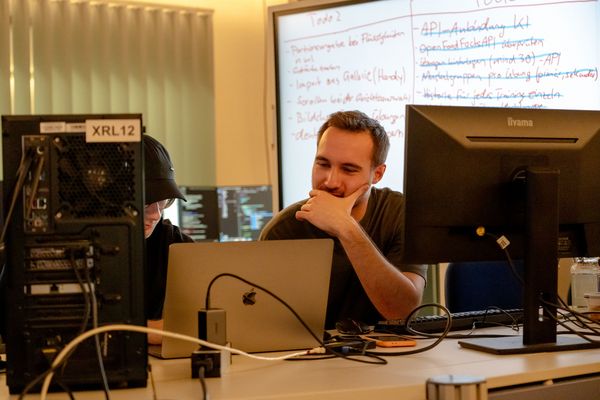
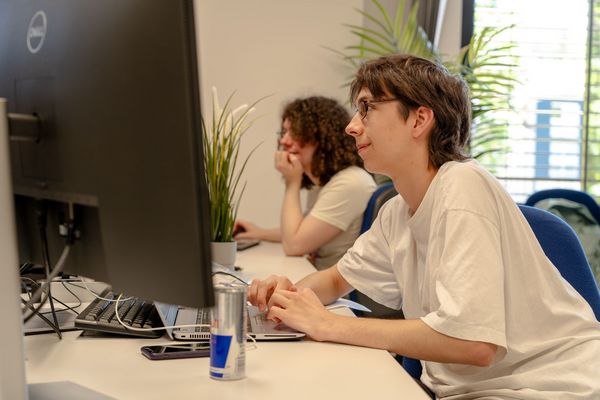
A day and a night of coding, teamwork and creative workarounds led to surprisingly advanced prototypes. The focus was on digital solutions for real-world challenges: from medicine and data analysis to sustainability. The countdown began at 10 am, and then it was time to form teams, understand the problems, refine ideas and get started.
Professor Dr.-Ing. Simon Adler, programme coordinator for Computer Science and co-organiser of the hackathon on behalf of the university, summed up the unique nature of the event: “The hackathon is a social event bringing together computer scientists and industry partners. We work in parallel on joint projects with companies and on topics of the future.”
Computer Science student Julia Biel summed up her impressions as follows: “I particularly liked the fact that we had the chance to work with real company software. It also gave us a deeper insight into what lies ahead after graduation and into career options.”
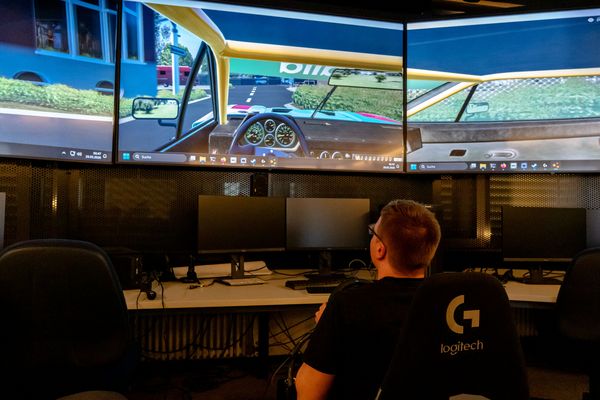
One of the hackathon’s main focuses was on digital tools for the medical sector. One team developed a prototype to optimise waiting times at doctors’ offices. This involved not just simple appointment scheduling, but also many factors that can influence day-to-day practice: patient behaviour, the weather, traffic updates and disruptions to public transport.
Another team worked on an AI-powered billing support system. The idea was to use consultations and existing data to create a centralised overview that makes billing options and necessary steps clearer. This could help ease the workload for doctors and office staff in future.
An AI support assistant was also developed during the hackathon. To achieve this, the team set up a so-called RAG pipeline – a system in which an AI model can access a document database in a targeted manner. The aim was to create an assistant that relieves the workload on internal support teams, takes various software manuals into account and backs up its answers with correct source references.
Not all projects started with brand-new hardware. The ‘Kindle Process Monitor’ project involved reusing old Amazon Kindle devices – that is, Amazon’s e-book readers – which were no longer really suitable for everyday use. The students upgraded the devices, installed their own software and developed two apps: one that displays real-time data from industrial machinery, and another that shows the occupancy of lecture rooms. In this way, discarded technology was transformed into an energy-efficient process monitor – sustainable, creative and rather clever.
Another team developed a document workflow based on a Postgres database. Postgres is a database system – in other words, software that can be used to store, manage and retrieve data. The aim was to test the limits of what was possible: work packages, dependencies and handover between individuals were to be implemented exclusively via the database system. All functions were implemented directly in Postgres – from calculations and HTML output right through to interfaces via which other programmes can retrieve data.
With the ‘Fueld’ app, students combined nutrition, exercise, sleep and wellbeing. What was particularly exciting was that the team relied on ‘Vibe-Coding’ – that is, intuitive programming via descriptive prompts to the AI, without having to code every detail themselves. The result showed that AI speeds up the prototyping process enormously, but still requires systematic guidance from humans to implement all functions precisely.
Other projects ranged from a Tetris AI that treats the game as a logistical problem to a homemade billiards table with gesture recognition in Unity, a development environment for interactive applications.
One question was central to all of them: how far can you get in 24 hours if you simply get started?
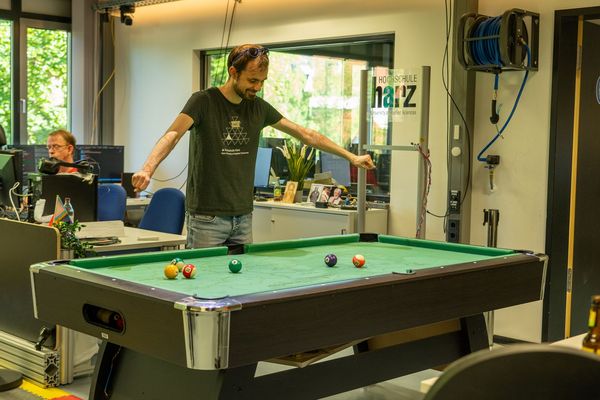
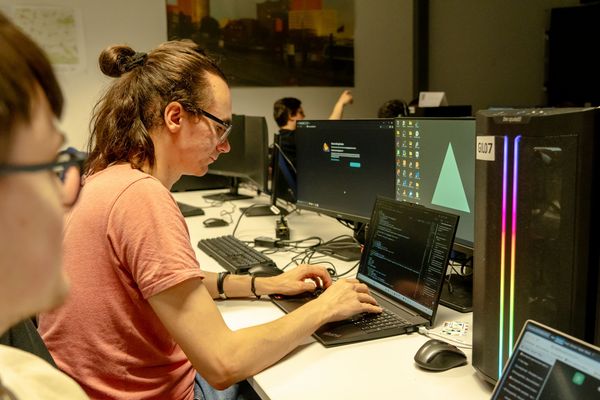
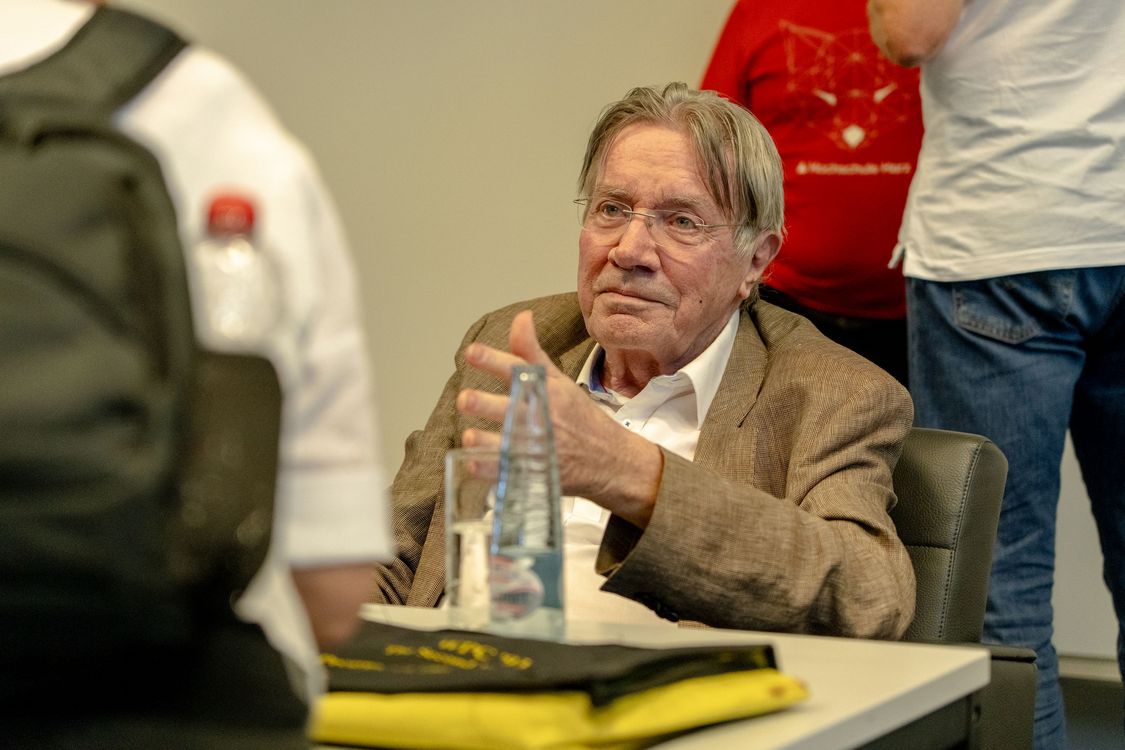
In the early evening, Prof. Dr Horst Zuse shared fascinating insights into the life story of his father, the legendary computer pioneer Konrad Zuse, and into the dawn of digital computing. His public lecture bridged the gap between the early days of automated computation and current topics such as artificial intelligence.
After the talk, everyone gathered for dinner – a good opportunity to take a deep breath, chat and recharge their batteries. Afterwards, the teams got back to work: programming, testing, modifying, discarding and rethinking.
By the time the midnight snack rolled round, some teams had hit a snag: interfaces weren’t working as planned, models weren’t yet delivering the desired results, or time had suddenly become very tight. Problems that had seemed impossible to solve during the night were eventually cracked in the early hours of the morning.
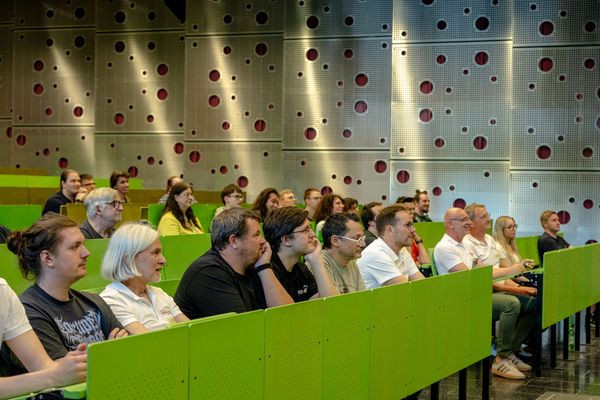
At breakfast around 7 am, the tiredness was palpable, but the anticipation of the presentations outweighed it. At 9.30 am, the teams presented their results and their key ‘lessons learnt’ in the main lecture theatre. The jury awarded the ‘Wartezimmer’ team a gift voucher for the escape room in Wernigerode for their solution to optimising doctors’ surgeries.
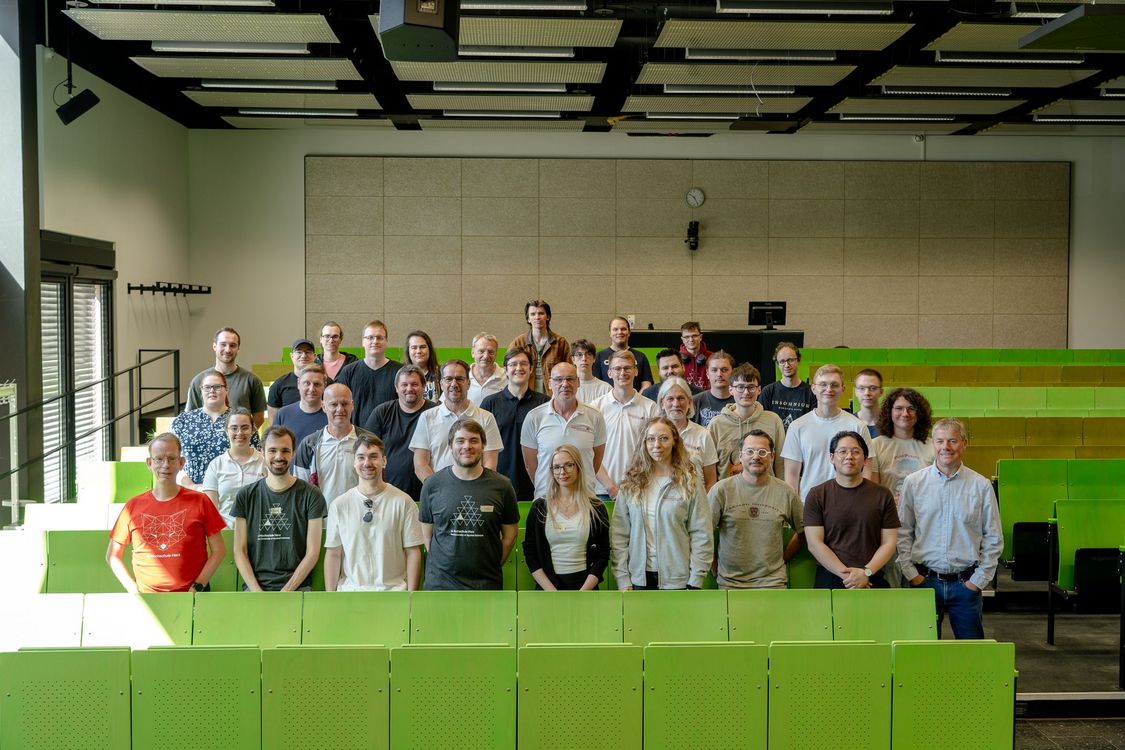
The hackathon impressively demonstrated how quickly an idea can be turned into an initial prototype – particularly when people with different perspectives work together. Students, lecturers and company representatives contributed their expertise, tried out new ideas and learnt from one another. At the same time, it became clear that even the best technology is of little use without good communication, team spirit and a willingness to work together on solutions.
AI, coding and innovative projects – these and many other exciting topics form the focus of the degree programmes offered by the Faculty of Automation and Computer Science. Applications for the 2026/27 winter semester are still open until 31 August for degree programmes with no admission restrictions. For degree programmes with restricted admission, the application deadline is 15 July. Full details on applying to Harz University of Applied Sciences can be found here.
10.07.2026
Author: Celine Fix
Image author: © Marlene Lotz
Image rights: © Harz University of Applied Sciences