

On Easter Sunday morning, before the sun came up over Wernigerode, 13 international students set off together with Regina Bernhardt, the integration officer and lecturer in German as a foreign language at Harz University of Applied Sciences. At 5.30 am, the New Evangelical Congregation’s Easter service began at St Johann’s Church in the town centre. For many of the young people from Azerbaijan, Sri Lanka, Nepal, Pakistan, Bangladesh and India, celebrating Easter in Germany was a special experience.
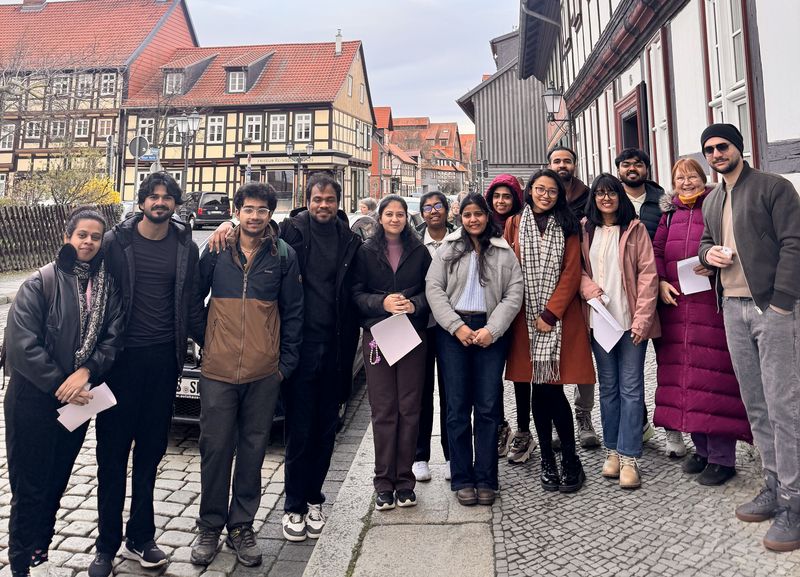
“No matter what someone’s religious background is – attending an Easter service can be a moving experience,” emphasises Regina Bernhardt.
Vaibhav from India describes his impressions: “Lighting the candles was particularly moving; it created a calm and reflective atmosphere. Even though the rituals were different from what I’m used to, I could feel the significance of the moment.” Rafael was also impressed by the service: “I felt like a child again, celebrating this festival in a truly religious way, just as I remember from my childhood in Russia. It was lovely to experience those emotions once more.”
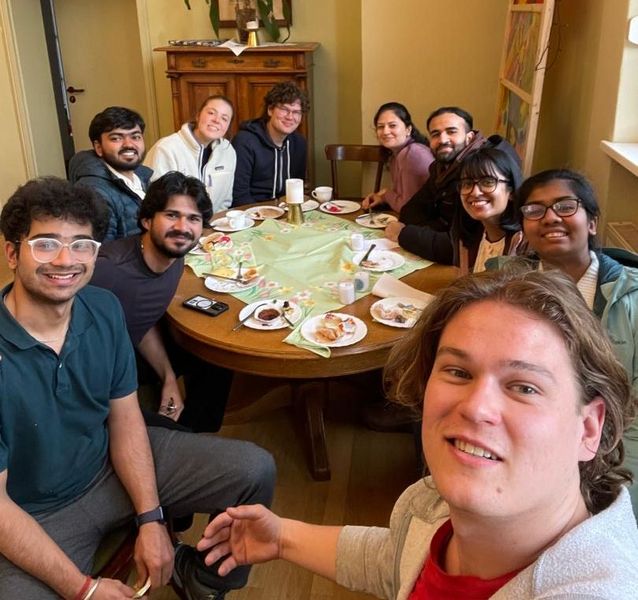
After the service, the community invited the group to join them for breakfast – an opportunity to chat and share their impressions.
“It wasn’t just the religious ritual in the church, but above all the feeling at breakfast of how people interacted with one another,” reports Alita from Nepal, emphasising: “Even as an international student among strangers, I felt so much warmth. It was incredibly lovely to sit with people who genuinely wanted to talk to me, were curious about my experiences in a foreign country, and made me feel like I belonged.” Amit from India also highlights the atmosphere: “Experiencing Easter in Germany for the first time was uplifting and enriching. What surprised me most was the deep sense of community and the peaceful atmosphere of the service.”
Regina Bernhardt was moved by her students’ openness: “I always find it wonderful how such moments cross boundaries. The students bring their own religious and cultural traditions with them – and are able to understand and share in the symbolism of light and renewal.” For her, the Resurrection has not only religious significance, but also represents the awakening of nature, the transition from winter to spring – and the light that triumphs over darkness.
10.04.2026
Author: Gesine Legler
Image author: © Alita Shrestha; Matthias Domsgen; privat
Image rights: © Hochschule Harz
