

How three young women are developing the ‘Fravia’ app whilst completing their studies
Three female students, one idea and a semester to work on it: during the entrepreneurship semester at Harz University of Applied Sciences, Hannah Höpfner, Lene Böttcher and Jana Meyer developed Fravia, a cycle-based calendar app. Following an initial trial phase, they intend to take their idea further and launch a start-up.
Fravia combines cycle tracking with recommendations for exercise, nutrition and daily life planning. “The cycle is much more than just menstruation,” explains Hannah, one of the app’s co-developers. “Our energy levels change throughout the month, and that’s exactly what should be reflected in our everyday lives.” Through daily check-ins, users can indicate how much energy they have and whether they are experiencing any symptoms. Based on this information and the current phase of the cycle, Fravia aims to provide personalised recommendations on whether certain nutrients should be consumed, whether a period of relaxation might be helpful, or whether right now is the best time to tick off tasks on your to-do list. Recurring symptoms can also be identified in this way: for example, if migraine symptoms regularly occur before menstruation, the app is designed to alert users in good time and help with everyday planning. The aim is to become more aware of one’s own cycle and to tailor daily life more closely to individual needs.
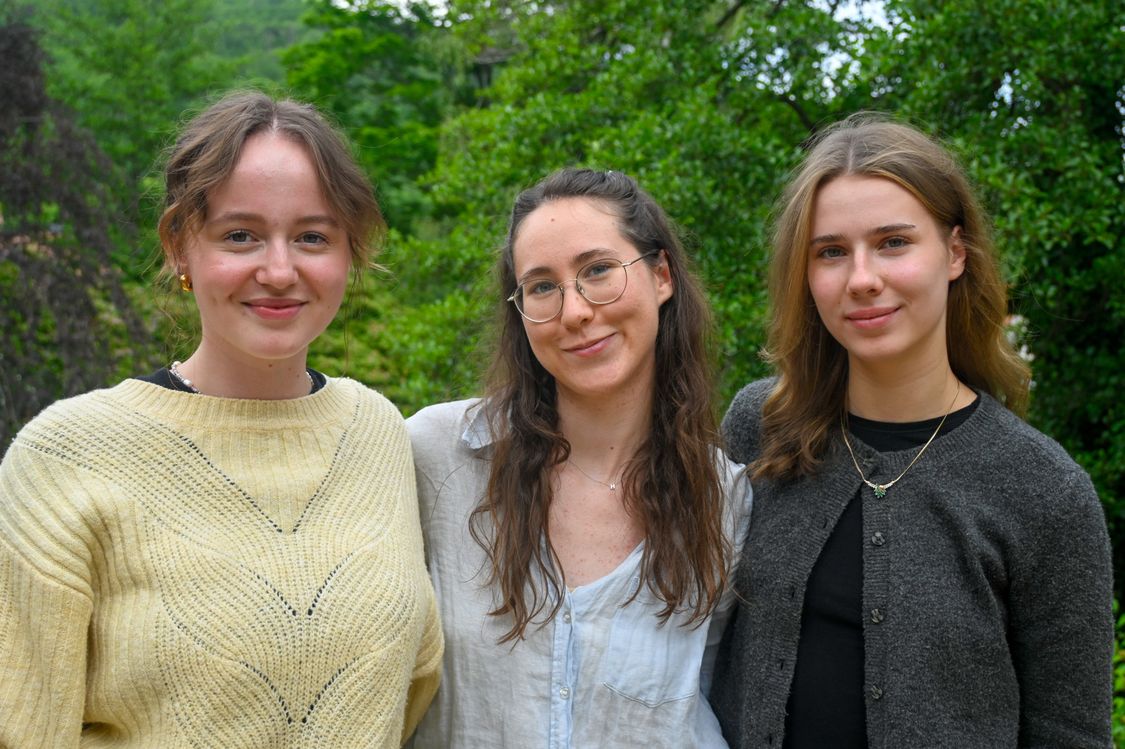
The students developed the idea for the app as part of the Entrepreneurship Semester. This takes place annually during the summer term and offers students at Harz University of Applied Sciences the opportunity to work on developing their own business idea over a period of several months. “Through a series of modules that gradually build on one another, they receive practical and specialist guidance – ranging from team building and presentation tips to start-up financing,” explains Prof. Dr Tobias Blask, Professor of Marketing Management and Digitalisation, who provides academic supervision for the Entrepreneurship Semester. The aim is to systematically develop an idea into a concrete business model. Upon successful completion, participants receive a certificate.
As the entrepreneurship semester is, in principle, open to all interested students at Harz University of Applied Sciences, the Fravia founders were able to choose the programme regardless of their degree programme – Hannah and Jana are in their fourth semester studying Sustainable Management, whilst Lene is studying Business Psychology. “How exactly the semester can be integrated into an individual’s study programme, however, depends on the specific degree programme,” explains Tobias Blask, who is available as a point of contact for any questions about the programme and offers personalised advice.
Hannah, Lene and Jana laid the foundations for their business concept during the summer semester 2026. Initially, they worked on the idea of presenting AI-generated answers in a more understandable way, but the lack of a personal connection meant that enthusiasm didn’t really take off. Without wasting any time, they decided on a topic that truly matters to them. “I keep noticing during my studies that my motivation doesn’t necessarily align with my to-do list. Yet it would be so much easier if I scheduled important tasks and study sessions for times when my energy levels are particularly high,” explains Jana. The idea for Fravia was born. Although there are already numerous period-tracking apps, none of them combine period tracking with a diary and provide personalised tips for leisure activities and eating habits.
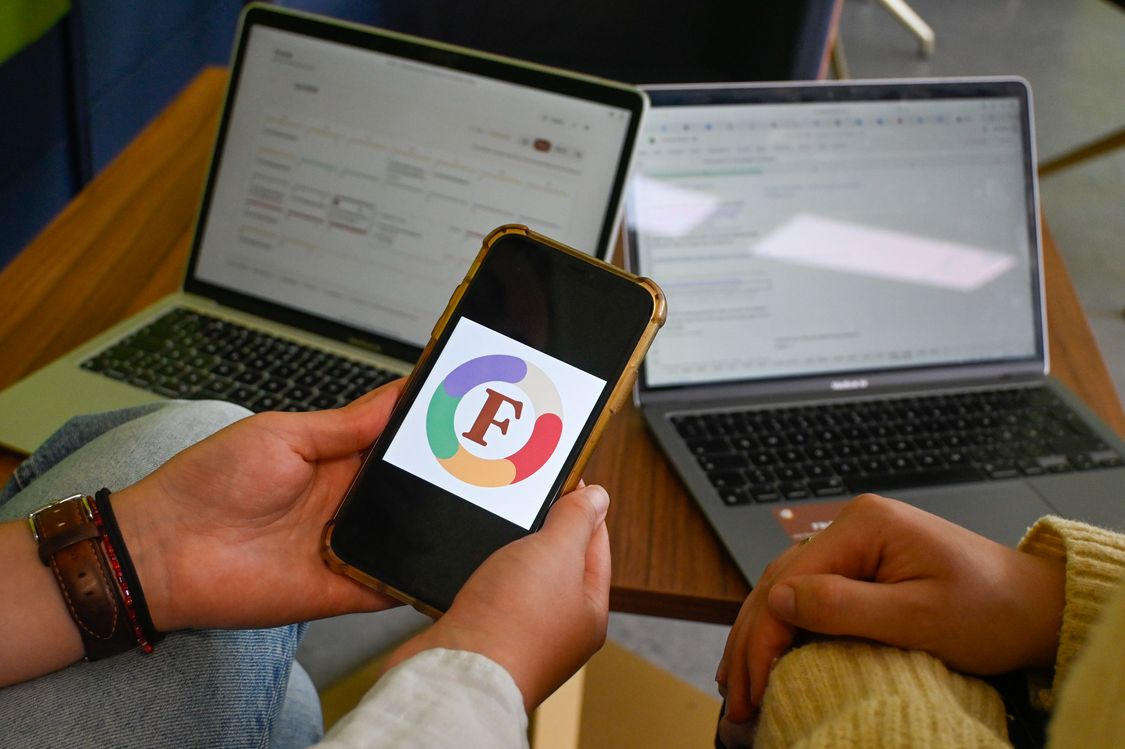
The first step had been taken – but would their app actually attract potential users? “Before a business idea can be put into practice, it’s essential to assess the demand – in other words, whether the idea stands a chance on the market,” explains supervisor Tobias Blask. “Using the methods of the so-called Lean Start-up approach, you can, for example, test ideas at an early stage, evaluate them based on feedback and then develop them further. These are precisely the kinds of processes the students learn about during the semester.”
So the three students developed a questionnaire and interviewed women aged between 19 and 45 about their periods and their experiences with existing period-tracking apps. To do this, they approached women directly after exercise classes. “Many are dissatisfied with the existing apps,” says Jana. “This made us realise: it’s not just the three of us, but many other women as well.” Based on this feedback, the team developed an initial version of Fravia, which was then tested by around 50 women. “We subsequently asked which features the testers particularly liked. Many mentioned the recipe feature, which provides personalised recipe suggestions to users. We were particularly pleased about this, as this feature was originally a spontaneous idea,” reports Hannah.
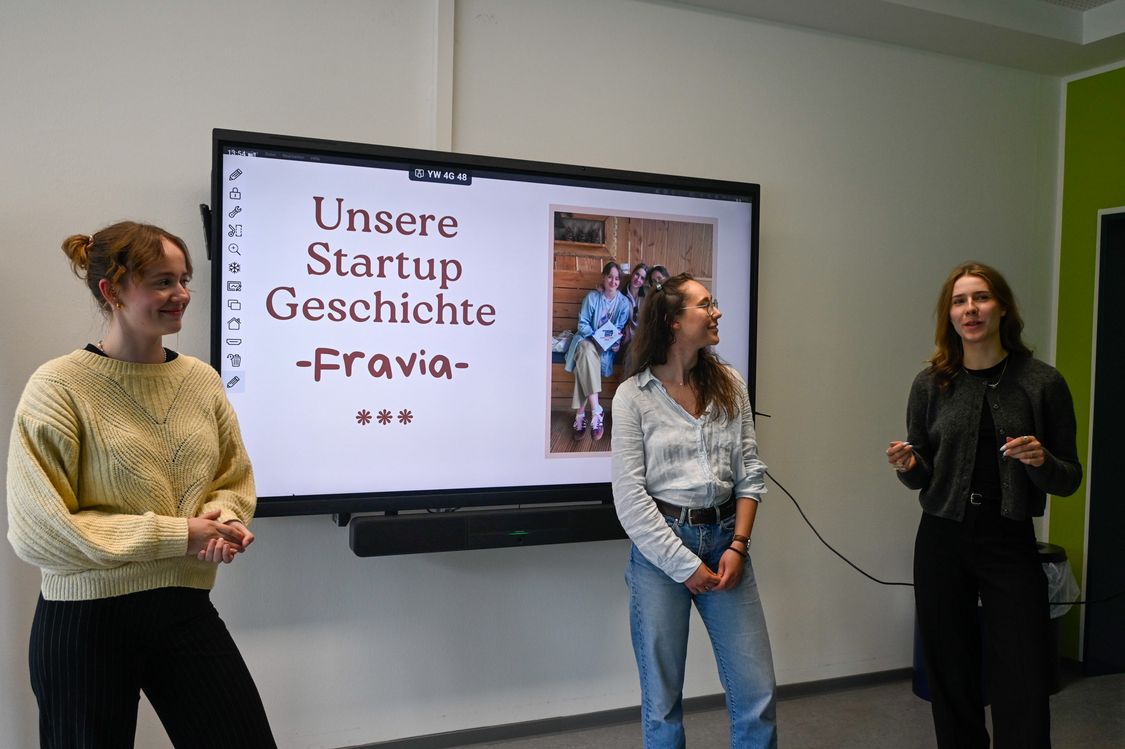
Choosing the entrepreneurship semester was a decisive step. “The methods we learnt over these months have helped us make enormous progress in bringing our idea to life. Not only did we learn a great deal about starting a business, but above all we were given practical tools with which we could further develop our idea,” says Hannah. Supervisor Tobias Blask sums it up: “The entrepreneurship semester is our most accessible programme for anyone who wants to find out whether entrepreneurship is right for them.”
The project isn’t over for Hannah, Jana and Lene just because the entrepreneurship semester has ended. They want to develop their idea further, expand their social media presence and launch the app in the major app stores so they can reach users beyond Harz University of Applied Sciences. “We want to help as many women as possible to use their physical and mental energy in a targeted way and to go about their daily lives more mindfully,” says Jana. They recently discovered just how well their idea is being received at the Startup Fight Club. At this event for young entrepreneurs, they competed against 15 teams from Saxony-Anhalt and won the audience award with their idea for the app.
The team also plans to apply for the exist start-up grant. Sophie Moneke from the Application Lab will advise and support them throughout the several-month process of preparing the application and its final submission. The aim is to secure one year’s financial start-up funding for the business venture. Fravia also receives support from the team behind the ‘gründerwald 4.0’ project, which provides information on the fundamental aspects of setting up a business and other start-up support services. With these two service centres – which are funded by the European Regional Development Fund (ERDF) – as well as the preparatory entrepreneurship semester, Harz University of Applied Sciences offers a wide range of opportunities for students interested in starting their own businesses.
Fancy giving Fravia a go? Click here for the app.
You can find out more about the project’s development on Fravia’s Instagram page at @fravia.app.
If you have any questions about entrepreneurship and setting up a business, you can contact the start-up support service run by the gründerwald 4.0 project at any time.
16.09.2026
Author: Leonie Wolff, Karoline Klimek
Image author: © Leonie Wolff
Image rights: © Harz University of Applied Sciences
